

Are you thinking of starting a career in Digital Marketing? It’s a great choice! I can tell you this without hesitation. I’ve been practicing digital marketing for more than 20 years, and it's never too late for beginners (with and without prior experience) to get into digital marketing.
The good news is that you can learn digital marketing without following a digital marketing degree at a college or university, although there are plenty of options.
You can begin a career in Digital marketing by building the required skills using online resources and by serving clients around the World from the comfort of your own home.
How to Start Digital Marketing
Here are 10 steps you can follow today to get into digital marketing:
- Learn The Basics of Digital Marketing
- Start Your Own Website and Build a Portfolio
- Become An SEO Expert
- Get a Google Ads Certification
- Learn Paid Social Advertising
- Become An Expert In Google Analytics
- Get a Digital Marketing Job As a Freelancer
- Work As a Digital Marketing Intern
- Stay Informed of New Updates And Keep Learning
- Learn How To Use Digital Marketing Tools
1. Learn The Basics of Digital Marketing
For beginners in digital marketing, the first obvious step is to understand what digital marketing is and the main components that make up digital marketing.
Digital marketing, or online marketing as it is sometimes known, is a broad term that is used to describe the process of marketing on the Internet.
It has several channels that cover all areas of online promotion. You need to understand that it’s not a single discipline, but it has many processes that can participate in a digital marketing campaign.
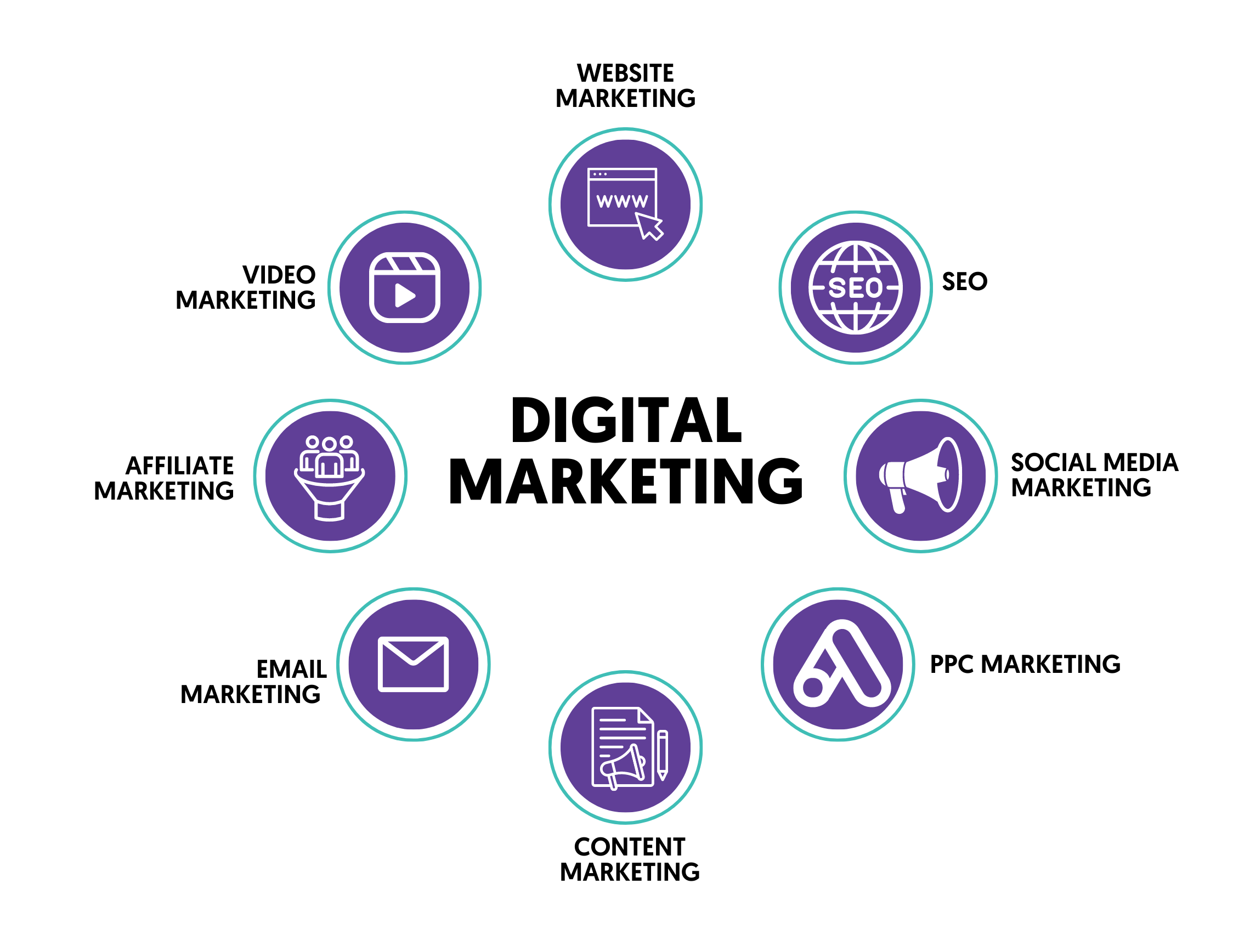
In particular, digital marketing has the following channels:
- Search Engine Marketing: covers search engine optimization (organic SEO) and paid search advertising.
- Website Marketing: techniques for promoting your website on the internet.
- Content Marketing: how to use different types of content in your digital marketing campaigns.
- Email Marketing: marketing products or services using email.
- Social Media Marketing: marketing on Facebook, Instagram, TikTok, LinkedIn, and other social media networks
- Mobile Marketing: marketing on the app stores (Google Play and Apple’s App Store)
- Video Marketing: marketing on YouTube, Vimeo, and other video channels
- Affiliate Marketing: making sales by promoting other people’s products and getting an affiliate commission.
A good digital marketing specialist should have the necessary skills to work with ALL the above channels.
Don’t get stressed. You don’t have to learn everything from day 1.
As you progress through your digital marketing career path, you’ll get a chance to work with different techniques, technologies, and tools, and eventually, the puzzle will be completed.
Where should you start? Think about whether you’re drawn to the creative side of marketing (writing, content, and social media) or the data side (SEO, paid ads, and analytics). Either way, learn the basics of every channel first, then go deeper in the area that suits you.
Resources to learn more
- Digital Marketing Courses - A list of the 10 best courses to learn digital marketing (free & paid).
- Courses for Beginners - Free and paid digital marketing courses for beginners, including HubSpot Academy and Google’s programs.
- Digital Marketing Full Course - Build the necessary skills to start a career in digital marketing.
- Digital Marketing For Beginners- an easy guide for beginners to digital marketing.
- Digital Marketing Certificates - Get certified in digital marketing and boost your career.
2. Start Your Own Website and Build a Portfolio
Once you learn the basics, the next step is to get your hands dirty and start practicing digital marketing. If you would rather build your own channels than follow a job path, here is how I would start digital marketing today.
One of the best ways to apply different digital marketing concepts in the real world is to start your own website.
Digital marketing is not a theoretical concept, but it’s highly measurable and practical. It’s not enough to know the theory behind SEO and social media marketing. You need to know how to apply the different techniques in practice.
Throughout your digital marketing career, you’ll be asked to promote different kinds of websites to either increase their organic traffic (SEO) or sales through PPC and social media advertising.
To gain the necessary skills and confidence, start your own website combining both concepts.
In other words, set up a blog and work on increasing your rankings and, at the same time, either create a product or find a product to promote through advertising and try to make sales.
I know that this process will take time, and if you are a beginner, the learning curve will be steep, but it’s the only way to build a solid foundation for your career.
Having your own website will not only help you to learn different concepts, but you can use it as a showcase to convince new employers or clients to trust you and secure a good contract or job.
Treat it as your portfolio. Besides your own site, you can:
- Run a small test ad campaign with a modest budget and document the results.
- Do an SEO audit of a real website, such as a friend’s business, and write up your recommendations.
- Grow a social media page around a topic you know.
Write up each project with what you did and the results you got. That’s what employers and clients want to see.
When we hire new digital marketing specialists, we don’t just look for certifications but for people who can prove their knowledge, and having a website with high rankings and traffic is the best way to do this.
The fastest way to start a career in digital marketing is to build job-ready skills using a proven step-by-step training course. The Digital Marketing Full Course will teach you how digital marketing works and prepare you for an entry-level job.
3. Become An SEO Expert
I recommend starting with SEO. Before anything else, become an SEO expert, and then build other skills.
With SEO you’ll learn how to create websites that both users and search engines love, and you can apply the same concepts to improve your Google Ads and Facebook paid campaigns.
Build your SEO career gradually and when you feel that you have mastered the skills of SEO, continue with the rest.
SEO goes hand in hand with two other core skills: content writing and email marketing. Almost every digital marketing job involves creating content and turning visitors into subscribers and customers.
Resources to learn more
- SEO Certifications - online SEO courses to learn SEO and get certified.
- SEO Full Course - a complete course on SEO for beginners.
- How to Learn SEO - get a learning plan to teach yourself SEO.
4. Get a Google Ads Certification
Part of your job responsibilities as a digital marketing professional is to use Google Ads to promote products or services in the various Google properties and websites on the Internet.
The fastest way to acquire the necessary skills is to get a Google Ads certification. There are many online resources to help you become a Google Ads Expert, and getting a certification is a great way to prove to your clients or potential employers that you have the necessary skills.
Resources to learn more
- How to Get Certified in Google Ads - a step-by-step guide to becoming certified in Google Ads.
- How to Become a PPC Specialist - a detailed explanation of how to start a career in paid search.
- Best Google Ads Courses - the best online courses to build Google Ads skills.
5. Learn Paid Social Advertising (Meta, TikTok, LinkedIn)
The next step is social media advertising. As a digital marketing specialist, you need to learn how the different social media networks work (Instagram, TikTok, LinkedIn, X, and Pinterest). For many businesses, most of the paid social budget goes to Meta Ads, which run on Facebook and Instagram, so that’s the best place to start. TikTok ads suit brands targeting younger audiences, and LinkedIn ads are the main choice for B2B.
Facebook besides being a great social network, is now one of the most important tools for any digital marketing campaign.
Getting organic exposure on Facebook is getting harder so the only way to use Facebook as a selling tool, is to learn how to use its advertising platform.
If you have already followed the steps above and have good knowledge of SEO and Google Ads, learning how to use Meta Ads will not be difficult.
Many of the concepts are similar to PPC but you still need to learn how to use the tool and familiarize yourself with each platform’s advertising policies.
Resources to learn more
- How to Become a Facebook Ads Specialist- follow these steps to become an expert in Facebook Advertising.
- Best Facebook Ads Courses - online courses to learn the secrets of running profitable Facebook campaigns.
6. Become An Expert In Google Analytics
Besides learning the different tools that can generate traffic, a digital marketing expert needs to know Analytics.
One of the main characteristics of any digital marketing campaign is that everything is measurable. You know how many people viewed your campaigns, how many people clicked on your ads, how many conversions they generated, and a lot of other metrics that cover every aspect of a campaign.
To be able to make informed decisions based on real data, you need to know how to measure the effectiveness of a campaign and how to analyze the results.
Your starting point is becoming an expert in Google Analytics.
Resources to learn more
- Best Google Analytics Courses - online courses from Google and other academies to learn Google Analytics.
- Google Analytics Certification - how to get the official Google Analytics Certification from Google.
7. Get a Digital Marketing Job As a Freelancer
The next step in your career path to becoming a digital marketer is to get a real digital marketing job.
Starting your own website (step 2 above) is a great way to practice the different digital marketing techniques, but doing digital marketing for a client is a different story.
Handling client accounts will ‘force’ you to set up procedures, improve your analytics and reporting skills, learn how to handle budgets, and manage client communication.
A good first step is to help local businesses, friends, family, or a nonprofit for free or at a low price. You get real results to show, and often a testimonial too.
You can also use freelance platforms like Upwork, PeoplePerHour, and Fiverr to apply for digital marketing jobs.
If you are a beginner, start with easy and quick tasks first and gradually move into bigger projects.
It’s difficult for freelancers with no feedback to get a job assigned, so make sure that you:
- Read the job posting requirements carefully and reply to any questions.
- Reply fast. Popular job posts get many applicants, so make sure yours is near the top of the list.
- Keep your prices low and reasonable. If you have no experience, you cannot charge a premium fee. Your goal at this stage is to gain experience so that you can make money later.
8. Work As a Digital Marketing Intern
Another way to grow your skills and experience fast is to get a real job as a digital marketing intern in an established agency, or to apply for entry-level digital marketing jobs such as marketing coordinator or assistant.
This is highly recommended because you will learn how a modern digital marketing agency works, and you can use some of their practices if you decide later to start your own agency or join another company as a digital marketing expert.
Starting your career as a freelance digital marketer without having working experience in a company will be more difficult because you’ll have to figure out everything from scratch.
As I mentioned above, working with clients is different than doing digital marketing on your own websites, and if you don’t have the right processes in place, you will lose valuable time in activities that are not ‘billable’, reducing your salary and revenue.
9. Stay Informed of New Updates And Keep Learning
Digital marketing tactics change all the time. Some digital marketers love this, and some hate it, but it’s a fact that digital marketing is a fast-changing industry.
Google constantly updates its search and advertising products, social media algorithms keep changing, AI is changing how people search, and in general, the digital marketing landscape is extremely dynamic.
This means that if you decide to start a career in digital marketing, you should know in advance that learning will be part of your DAILY activities.
I’ve been doing this for years now, and every day, I get to learn something new. In fact, 20% of my time is spent on reading about industry updates and new developments, case studies, learning new tools, and staying up-to-date with changes made in all digital marketing channels.
Resources to learn more
- Seroundtable - By far my favorite website for digital marketing news and updates. Barry does a great job informing us of everything happening in the industry.
- Search Engine Journal: News and resources on all digital marketing topics.
- Google Blog: Updates on all Google technologies.
10. Learn How To Use Digital Marketing Tools
Besides learning how to use Google Analytics, you must also learn other digital marketing tools.
When you climb up the ladder and become a digital marketing manager, you will have to manage a team of digital marketing specialists. The only way to evaluate their work and control the progress of multiple projects simultaneously is through tools.
A good tool will allow you to create dashboards for all channels and meaningful reports to management or clients.
There are many good tools available, and although they are not free, the monthly fee is an investment for your career and another great item for your resume.
My recommended tools are:
- Google Looker Studio: Free and can be used to create custom dashboards and nice reports.
- Semrush: This is the tool I use daily. You can use it for all your digital marketing needs.
- Google Search Console - A free tool by Google to monitor your website's performance in Google.
Is Digital Marketing A Good Career?
Digital marketing is a great career choice. Companies need to improve their online visibility, and the Bureau of Labor Statistics projects that employment of advertising, promotions, and marketing managers will grow 6% from 2025 to 2035, faster than the average for all occupations.
The fact that you don’t need to be physically present in a particular location makes digital marketing ideal for people who want to work from home.
FAQ
Is AI replacing digital marketing?
No. AI tools now speed up research, content creation, and reporting, but businesses still need people to set the strategy, judge the quality of the work, and take responsibility for the results. Learning to use AI tools well is now part of the job.
Do digital marketers make good money?
Yes. According to Indeed, the average digital marketer in the US earns $66,033 a year, and specialists and managers earn more as they gain experience. See our digital marketing salary guide for pay by role and location.
Key Learnings
To get into digital marketing, your first concern should be to build your skills. Digital marketing is not a ‘single thing’ you learn by taking a course and then getting to work.
Many disciplines make up digital marketing, and you should be an expert in all of them if you want to reach the higher end of the pay scale.
The best way to learn digital marketing is to practice on your own website. Create a blog and start writing content. Spend time mastering SEO and then move to Google Ads and Facebook marketing.
If you have the opportunity to join an established digital marketing agency, then do it. The experience you will gain working with experts and on multiple projects will be invaluable.
If you want to become self-employed or start your own digital marketing business, then start your career as a freelancer and gradually build your clientele and expand your business.
If you’d like one-to-one guidance along the way, working with a digital marketing coach can help you avoid common mistakes and move faster.