


You don’t need a university degree to get into digital marketing. Some companies still ask for one, but most employers care more about what you can do: whether you can rank a page, run a profitable ad campaign, or grow an email list.
With or without a degree, nothing stops you from offering digital marketing services as a freelancer or agency owner, which makes digital marketing a great profession.
In this guide, you’ll learn the exact steps to break into the online marketing industry. It will teach you how beginners can start a digital marketer career without a degree or prior working experience.
Do You Need a Degree for Digital Marketing?
No, a college degree is not required to work in digital marketing. There is no license or legal requirement to practice it, and most entry-level, freelance, and agency roles hire on skills and proof of work.
What employers want to see instead:
- Practical skills in at least one channel, such as SEO, paid ads, social media, content, or email.
- A recognized certification that shows you learned the fundamentals.
- A portfolio with real projects and results, even small ones.
Where a degree matters more is at the top of the ladder. Marketing manager and director roles at larger companies more often list a bachelor’s degree as a requirement, although experience and results can still outweigh it.
The digital world also changes too fast for textbooks to keep up. Search, social platforms, and ad tools change every year, so up-to-date practical knowledge is what gets you hired.
How to Become a Digital Marketer Without a Degree
You can become a Digital Marketer without a degree by demonstrating your skills and expertise through your work. You can build your practical knowledge by following digital marketing courses and certifications and through much practice.
These are the 10 steps to break into digital marketing.
- Examine The Requirements of Digital Marketing Jobs
- Find The Highest-Paying Jobs
- Enroll in a Digital Marketing Course
- Start a Blog and Build a Portfolio
- Choose a Specialization
- Follow The Work of Established Digital Marketing Experts
- Become a Digital Marketing Freelancer
- Apply For a Digital Marketing Job
- Start Your Own Digital Marketing Agency
- Build Your Personal Brand
1. Examine The Requirements of Digital Marketing Jobs
Since your goal is to start a career in digital marketing, you can begin your journey by analyzing what digital marketing skills are high in demand now. There is no better way to do this than looking at what employers look for.
Visit popular job search websites like LinkedIn, Indeed, and Glassdoor, and search for digital marketing jobs. Look at the requirements and examine the ‘required qualifications.’
You will notice that having a degree is optional and not a requirement to apply for a job. What is more important is the skills you have and your work experience.
If you’re starting now without experience, narrow your search to entry-level digital marketing jobs. There are many entry-level jobs that you can pursue that don’t require a marketing degree or working experience.
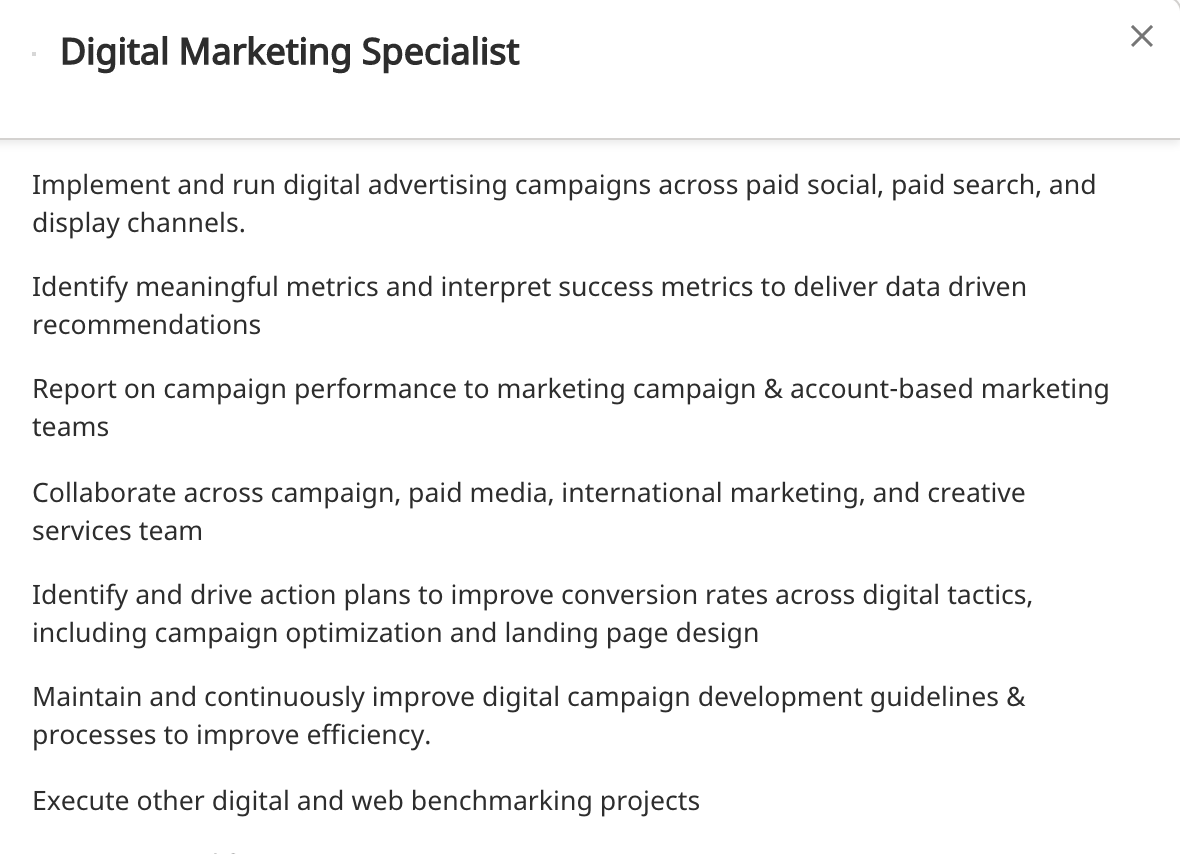
For example, look at this job posting:
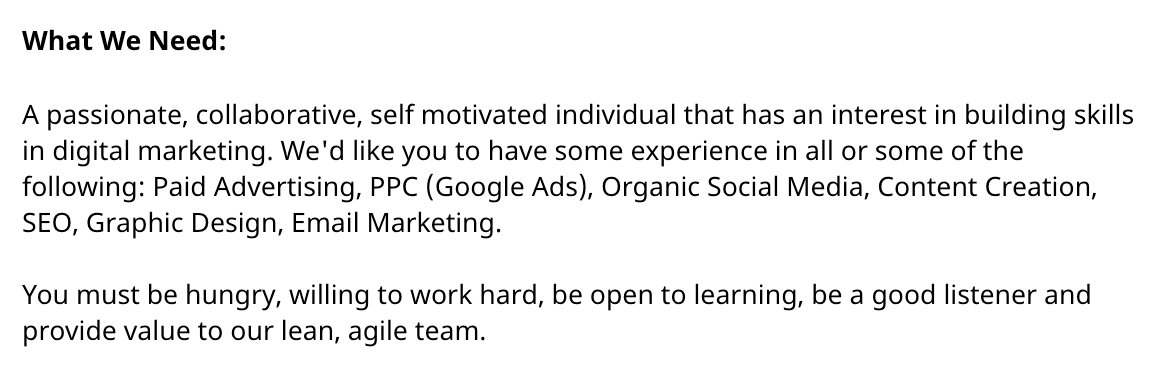
It pretty much summarizes the most common requirements of marketing jobs for beginners.
To make your analysis more specific, narrow your search to include only remote jobs (if you plan on working from home) or jobs in your local area. This will help you get a more accurate picture of available jobs.
Don’t apply for a job yet and don’t be disappointed if you don’t have the required skills. We’ll see below the best way to build your online marketing skills and get ready to break into the exciting world of digital marketing.
2. Find The Highest-Paying Jobs
While doing your analysis, looking at the salaries is also a good idea. Salary sites like Payscale and Glassdoor show what each role pays in your area. In the United States, the average salary for a digital marketing specialist is about $66,000 per year according to Indeed, and it gets higher as you get more experience.
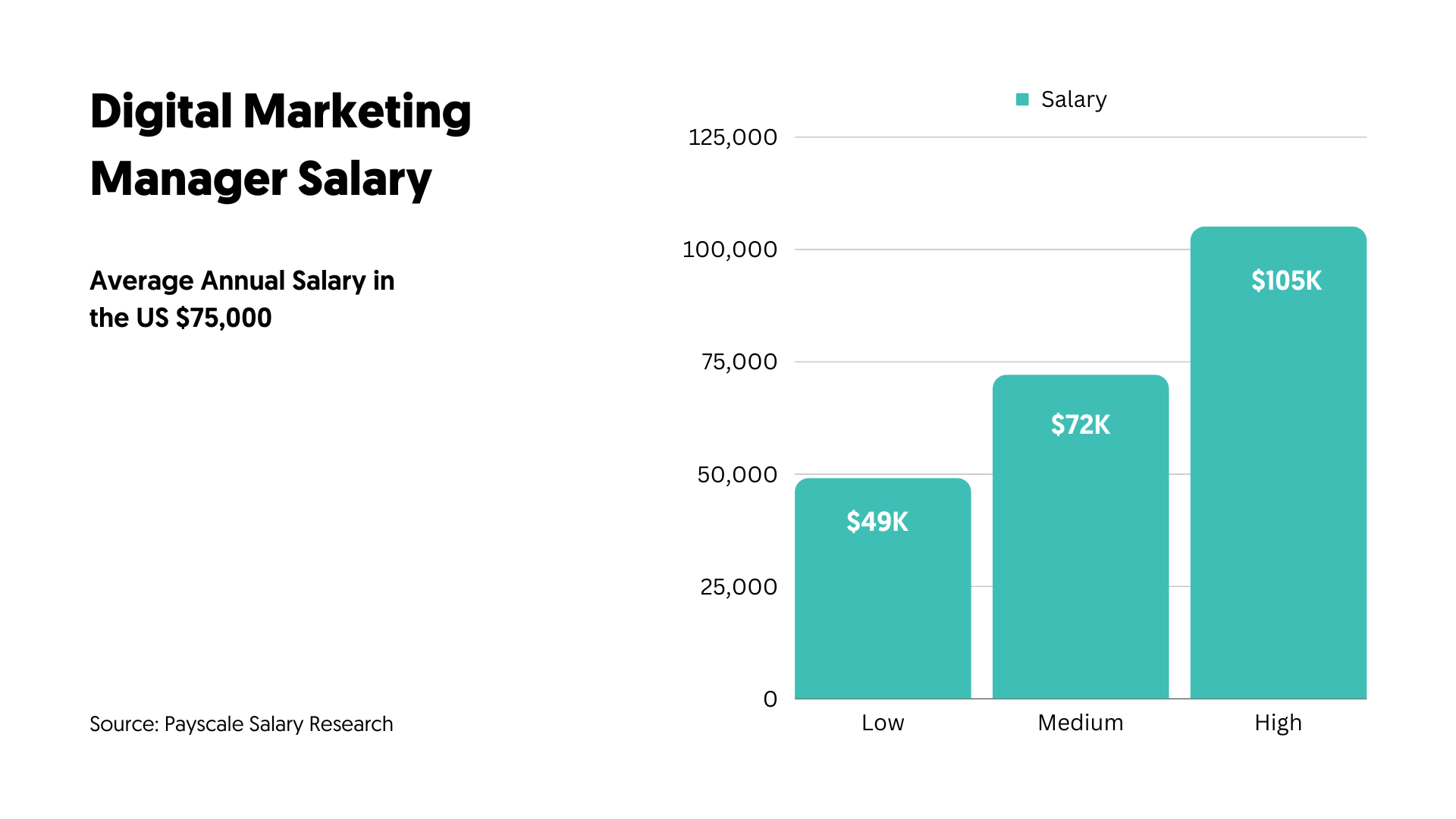
But, not all digital marketing jobs are equal. A digital marketing specialist wears many hats and has a wide range of skills, which is not something that everyone wants or can do.
As you can see in the comparison graph below, you can get into digital marketing as an SEO Specialist or social media marketing specialist. These roles are narrower: you need depth in one channel rather than knowledge of all of them, which makes them a faster way in. The trade-off is that a narrow role can limit how far you climb in the marketing department of a big company unless you broaden your skills later.
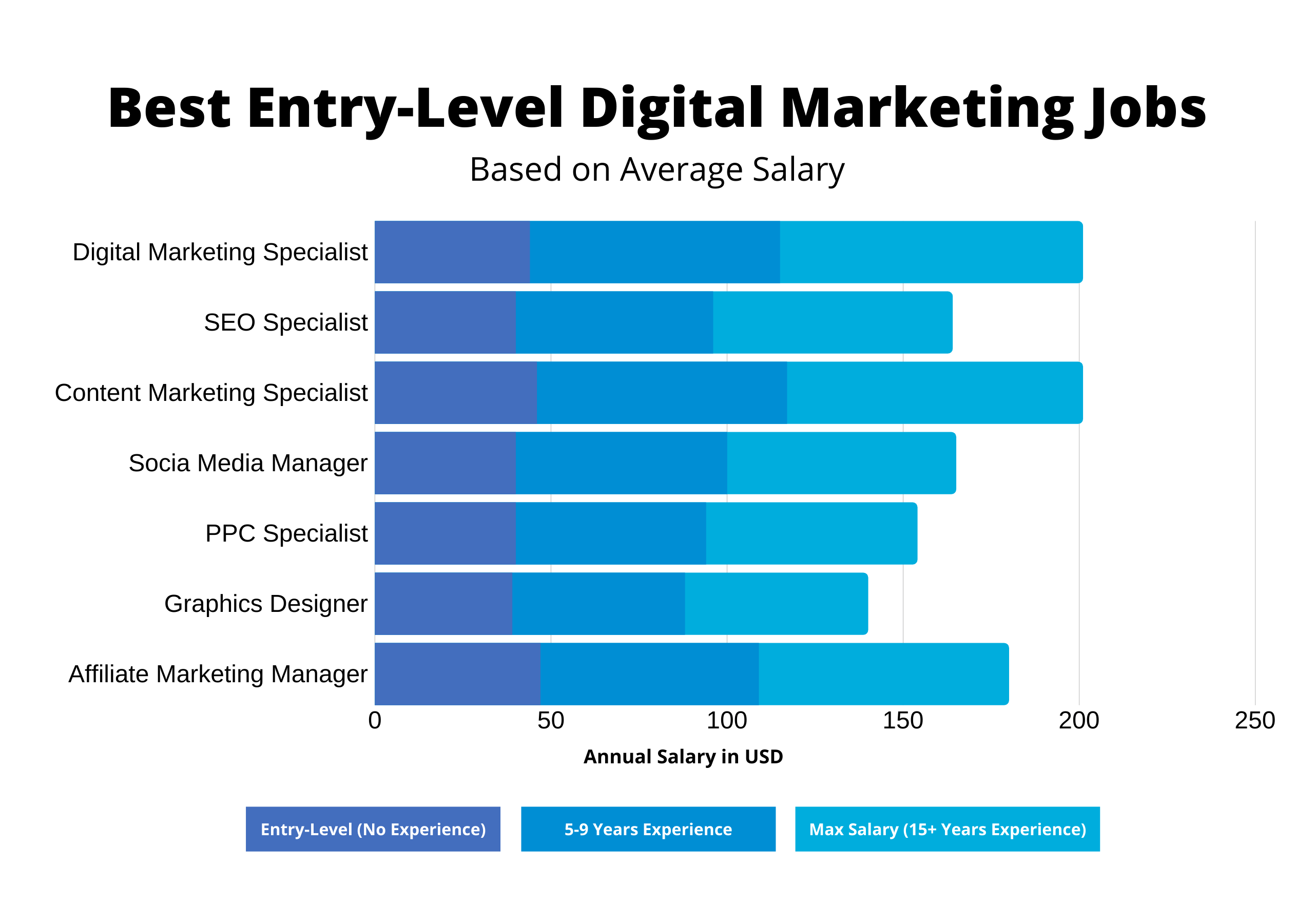
To summarize, you’re doing this exercise now to find what jobs are in high demand in your area, what skills are needed, and how much they pay.
Having this information in hand will help you build the necessary skills and pursue a career in digital marketing.
- How much do digital marketers make? - a detailed study of the salaries of digital marketing professionals.
3. Enroll in a Digital Marketing Course
If you don’t have a college degree, the best way to build your digital marketing skills and equip your CV with a recognized accreditation is to enroll in a digital marketing course and get certified.
Following a good digital marketing course is the fastest way to understand what digital marketing is and how it works.
Without a college or university degree, you can use your digital marketing certification to prove to your future employer that you know the basics and are willing to learn and build your skills.
When choosing a course, make sure that:
- It covers various digital marketing topics (SEO, content marketing, and Google Analytics are the absolute minima).
- It comes with a certification.
- It’s updated regularly.
- It comes with a money-back guarantee (for paid courses).
We researched and crafted a list of the best online digital marketing courses and certifications you can follow to learn digital marketing. If you’re starting from zero, see our list of beginner digital marketing courses.
Good options to start with are:
- Digital Marketing Full Course (Reliablesoft Academy with Certification)
- Fundamentals of Digital Marketing (Google Skillshop, free, with a Skillshop badge)
- Digital Marketing Certification Course (HubSpot Academy, free, with Certification)
- Professional Diploma in Digital Marketing (Digital Marketing Institute with Certification)
- Google Digital Marketing & eCommerce (Google With Certification)
- Digital Marketing Specialization (Coursera with Certification)
4. Start a Blog and Build a Portfolio
Digital marketing is a highly practical process, and the only way to find out if you have the skills to work as a digital marketing professional is to practice.
Only when you start blogging and get into the mindset of optimizing a website for search engines or running advertising campaigns do you understand what you have learned in a course and through studying.
Since your goal is to get into digital marketing, I recommend starting a digital marketing blog and not any other type of website. When you start blogging on digital marketing topics, you can benefit from many things:
- It will help you comprehend the different concepts better.
- It’s good for your personal brand.
- It’s good for your CV (in the absence of a degree and working experience).
- It’s the starting point of becoming a freelancer or starting your own agency.
- It will give you the confidence you need for a job interview.
Your blog is also the base of your portfolio. Without a degree or work history, a portfolio is the proof employers and clients look for. Add small projects that show results:
- An SEO audit of a real website, such as a local business or a friend’s site, with the issues you found and how you would fix them.
- A small ad test on Google or Meta with a modest budget, and what you learned from the numbers.
- Your own growth results, such as the traffic your blog gets from Google or the followers you built on a social account.
Put these on a simple portfolio page on your blog, with screenshots and a short explanation of what you did and why.
- How to start a website - If you don’t know how to make a website, this is your starting point.
- How to make money blogging - blogging can eventually generate an extra source of income for you.
5. Choose a Specialization
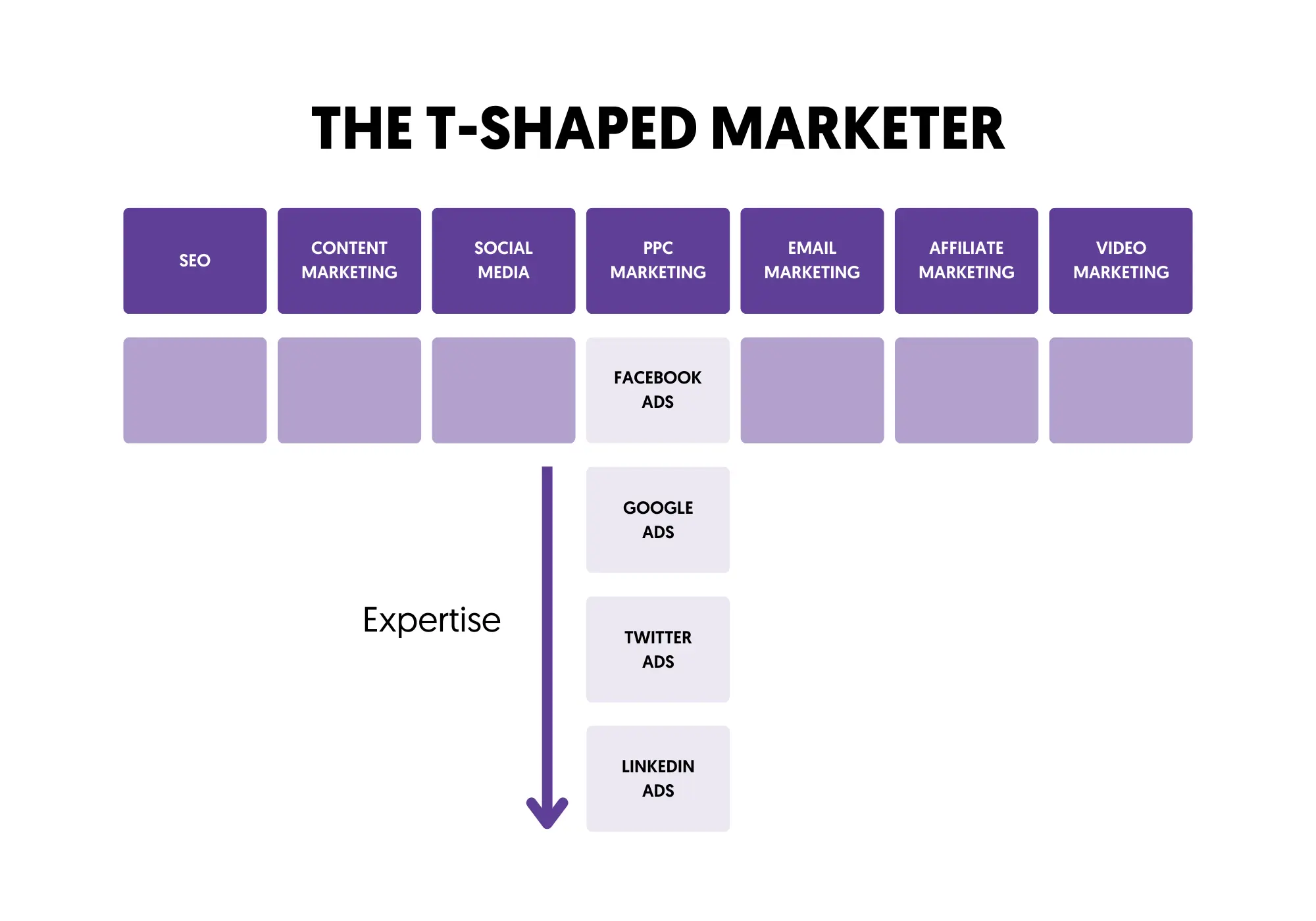
One of the first things you’ll notice when you start looking through job requirements and courses is that digital marketing has several specializations.
For beginners, this is too much information to absorb, so it’s best to start your career by choosing a specialization. In marketing, this is referred to as a T-Shaped Marketer. Once you become an expert in one area, you can expand your skills to cover more areas and eventually become a digital marketing manager.
Here are some tips to help you make your decision:
Digital Marketing Specialist - has good knowledge of digital marketing and knows how to run campaigns on different marketing channels. It has many skills and better career opportunities than other specializations.
SEO Expert - has great SEO skills. Knows how to do keyword research, can fix technical SEO errors, optimize content for search engines, and rank websites high in the search results.
Content Marketing Specialist - knows the ins and outs of content marketing. Loves writing. Can design, implement, and optimize content marketing campaigns.
Social Media Manager - has the skills to run campaigns on social media networks to promote a brand or product. Can analyze the results of social media campaigns. Manages the social media presence of a company.
PPC Specialist - can run paid campaigns on Google, Meta (Facebook and Instagram), Microsoft Ads, and other networks. Knows how PPC platforms work and how to target the right audiences.
Email Marketing Specialist - has the skills to run email marketing campaigns and convert visitors into leads and customers.
Affiliate Marketing Specialist - is responsible for expanding a company's affiliate program.
A simple way to choose is to ask whether you prefer the creative side or the data side of marketing. If you enjoy writing and building an audience, content, social media, and email are a natural fit. If you prefer numbers, testing, and tools, look at SEO, PPC, and analytics.
Regarding the best order to follow, it’s always recommended to start with SEO. SEO is at the core of any digital marketing strategy and one of the highest-paying jobs in the industry.
6. Follow The Work of Established Digital Marketing Experts
You'll need inspiration when you break into a new career, especially one that needs a lot of studying and practice. A great way to get inspired is to follow the work of established digital marketing experts.
Experienced marketers tend to maintain an active blog, and they share tips, success stories, and case studies that will help you get the inspiration you need to keep working until you reach your goals.
I’ve been working in the digital marketing industry for 20+ years now, and reading other blogs is something I do daily. Digital marketing learning is a continuous process, and there is always something new to learn.
My recommended blogs are:
7. Become a Digital Marketing Freelancer

Let’s recap the steps so far:
- You’ve researched and know which marketing jobs are in high demand now and how much they pay.
- You’ve gone through a course and know the basics of digital marketing.
- You’ve started blogging to teach others what you have learned about digital marketing and used your blog to test different digital marketing techniques.
- You have identified which websites to follow to enrich your knowledge and stay in sync with the latest developments in online marketing.
The next step before applying for a job is to become a digital marketing freelancer. You need to take this path before doing anything else for a couple of reasons.
- It’s the first step in building your portfolio. Even if you work with a couple of clients, this is much better than having no client experience, and it can play a role when applying for a job.
- It will help you understand what clients need and how freelancing works. Maybe you can decide that going full-time as a freelancer is what you want to do, so there is no need to look for jobs.
- It will make you some money and give you the confidence to move forward.
Freelancing also helps you answer an important question early: do you want to work for yourself or have a full-time job? A few months of client work will tell you which suits you better.
If you have no clients yet, start close to home. Offer free or low-cost help to a local business, a nonprofit, or a friend who runs a small company. In exchange, ask for a testimonial and permission to use the results in your portfolio.
After that, the best way to secure paying clients as a freelancer is to view the jobs posted on Upwork, Fiverr, and PeoplePerHour related to your specialization.
View the client requirements and reply fast to their applications. Keep your prices low and try to satisfy the needs of the client. Upon completing the job, ask for a review and post it on your blog and CV.
8. Apply For a Digital Marketing Job
Once you get to this point, it’s time to apply for a real job and start a career in digital marketing.
If you have followed the steps correctly by now, you should have a good understanding of digital marketing and some working experience either on your own blog or through freelancing.
You also know from steps 1 and 2 what the job requirements are and which positions are available in your area.
Apply for entry-level roles such as digital marketing coordinator or marketing assistant, and for internships. An internship is one of the easiest ways into the industry without a degree, and many interns are offered a full-time role at the end.
When you apply for a job, make sure that:
- Your CV is updated with your certifications, customer reviews, and working experience.
- Don’t hide the fact that you don’t have a college or university degree. What is important for employers is your skills and how you can help them with their campaigns.
- When asked for an interview, ensure you appear on time (whether physical or online).
- Prepare for the interview by familiarizing yourself with the company and what services they offer, who is the manager, when the company was founded, etc
- When asked questions that are a bit technical, don’t tell them the theory (they already know this) but the practical steps you would follow to complete the specific task.
- When you don’t know an answer, be honest. It’s better to say ‘I don’t know’ rather than give a wrong answer.
- Be yourself. There is no reason to panic. If you don’t do well in this interview, learn from your mistakes and apply for the next one.
9. Start Your Own Digital Marketing Agency
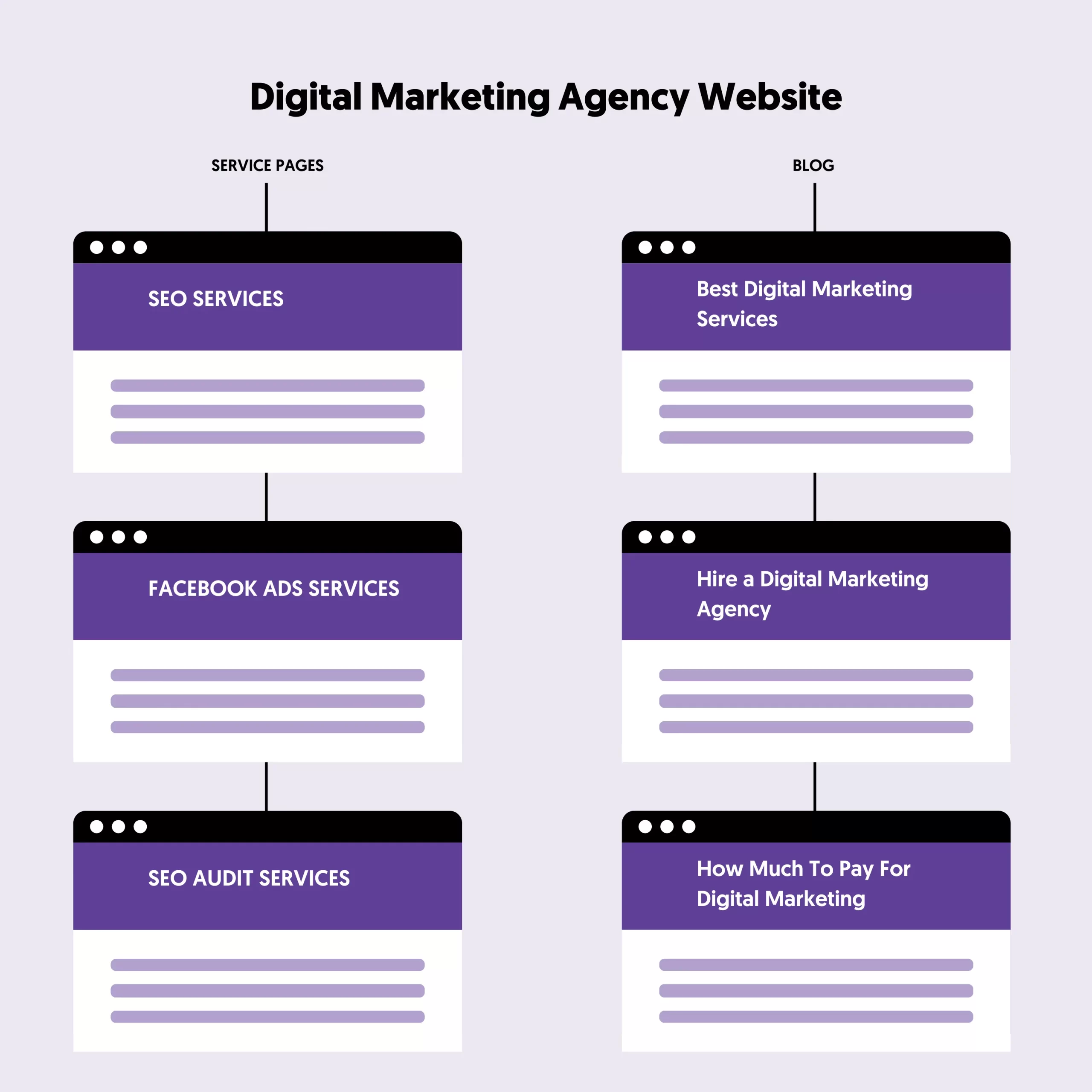
Another way to work in the digital marketing industry without worrying about degrees or job interviews is to start a digital marketing agency.
It will be difficult initially, but everyone can do it with the right approach and patience.
In the case of starting your own business, you’ll need additional skills like managing a business and working with remote teams, so it will be a good idea to spend some time learning how to do these tasks.
You won’t know everything from day one. Entrepreneurship is an ongoing process, but don’t get stressed; stay positive and look for the big picture.
The most challenging part of having a digital marketing agency is finding new clients.
Advertising is generally not an option because the costs are high, so the most efficient way is through blogging, retaining your existing clients, and getting new clients by referrals (from existing clients).
Some tips to help you get new clients from your blogs:Choose topics that potential clients may search for.
If your target market is small business owners, then make sure that on your blog, you answer questions or give advice that will be helpful to them.
Use simple language. Small business owners looking for digital marketing assistance probably don’t understand technical terms, so speak their language.
Make it easy to contact you. A simple contact form is enough to get a lead. Don’t ask users for too many details; get the lead and ask them questions during your meetings.
Blog consistently. In order to get any results from blogging, especially in a saturated niche such as digital marketing, you need to create a lot of good content for several months before you get enough search traffic that will convert into customers.
It’s a lot of work, but if you persist, you’ll get enough leads sooner or later to sustain and gradually grow your business.
10. Build Your Personal Brand
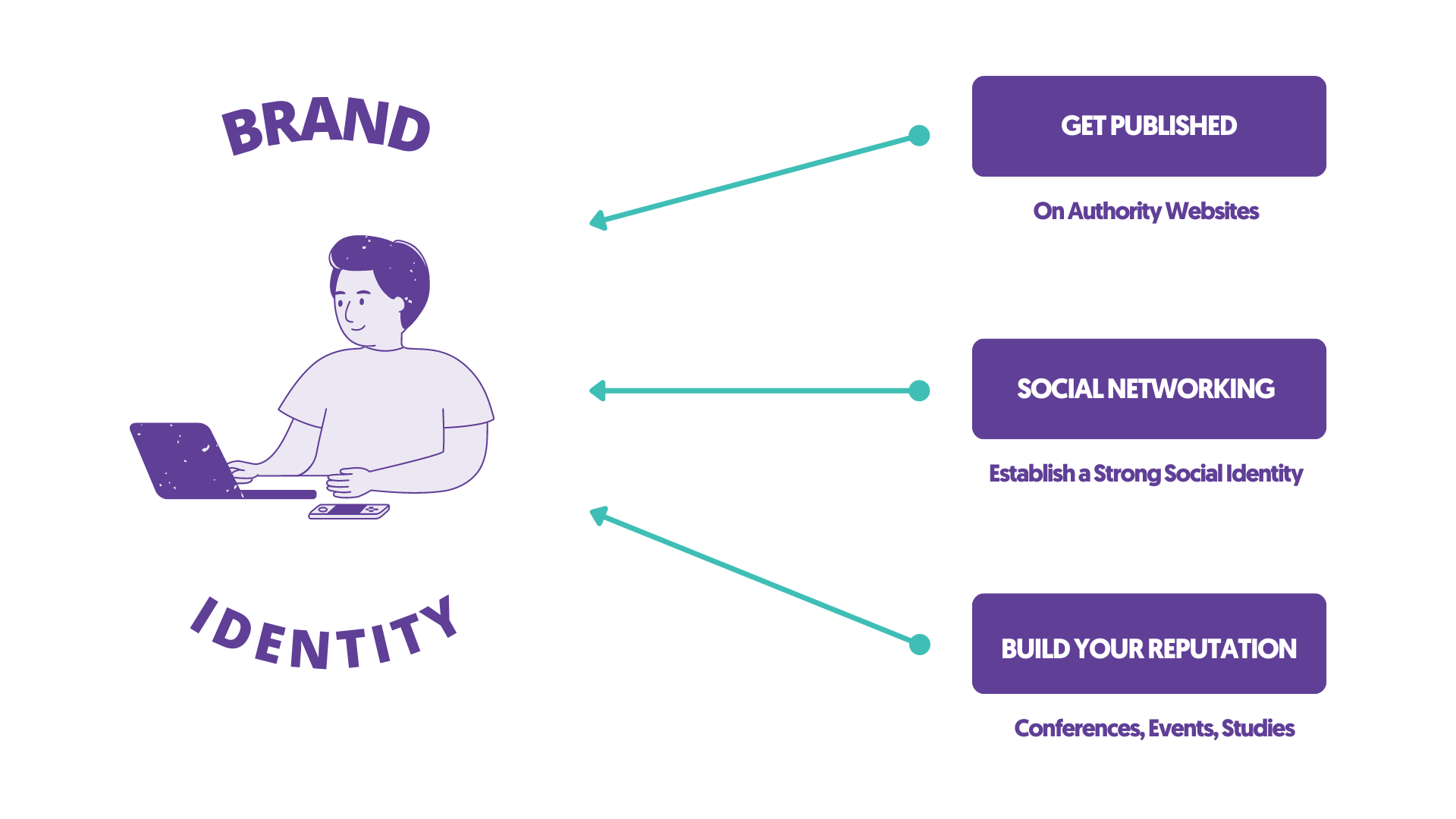
To become a successful digital marketing professional, you need to be recognized as an expert by others in the industry.
The only way to achieve this is to build your personal brand. You need to do this even if you work in another company, work as a freelancer, or run your own agency.
The best methods to build your personal brand are:
Maintain an active digital marketing blog - I’ve stressed this a number of times so far and it’s of great importance. Your blog is your business's front door and reflects your skills and knowledge.
Grow your social media following - create a profile on LinkedIn and X (formerly Twitter) and build your following. LinkedIn is where recruiters and potential clients look first. Facebook is also good but not that important for business purposes. Make sure that you follow the industry leaders and try to get some people to follow you back. Being followed by other digital marketers is important.
Guest post on other blogs - Guest posting, besides being an additional source of traffic and good for SEO, is also great for establishing your personal brand. Try to get published on high-trusted digital marketing websites and demonstrate your expertise.
Create a YouTube channel or podcast - if you feel comfortable speaking in front of a camera, starting a YouTube channel is great for your personal branding.
Network with other professionals - attending events and networking with other professionals is worth gold. Building friendships and personal relationships is a great way to gradually build the reputation of your personal brand.
Publish case studies and success stories - this is perhaps the best method to prove to others that you are a digital marketing expert. Publishing real case studies and sharing your success stories (for work you do on your blog or with clients) will get the industry's attention faster than any other method.
FAQ
Is it hard to get into digital marketing?
It’s easier to get into than most careers because there is no required degree or license, and you can learn the fundamentals online. The hard part is standing out, because many beginners have the same certificates. A portfolio with real results is what separates you from other applicants.
Do digital marketers get paid well?
Yes. Entry-level roles pay less, but salaries rise quickly with experience and specialization, and senior roles such as marketing manager pay considerably more. See our digital marketing salary guide for the numbers by role.
Will AI replace digital marketers?
AI is changing how digital marketers work, not removing the need for them. Tools can draft content, suggest keywords, and optimize ad bids, but someone still has to set the strategy, judge the output, and answer for the results. Learning to use AI tools well is now one of the skills employers look for.
Key Learnings
Becoming a digital marketer without a degree is not as difficult as it sounds. While having a degree is good and a requirement for some jobs, having good knowledge of digital marketing and some experience is more valuable.
I know from experience that most employers don’t care if you have a degree or not, but they care if you’re the person who can do the job efficiently.
The best way to demonstrate your skills and expertise is to show them examples of your work. If you know how to rank websites on Google, how to run profitable PPC campaigns, how to do keyword research correctly, and how to write great content, then you don’t need a degree or other qualifications to secure a digital marketing job, work as a freelancer or start your own business.
If you’re starting from scratch, your first step is to enroll in a course and learn what digital marketing is all about. Learn the different concepts and get a certification to add to your CV.
Once you know the basics, it’s time to practice and experiment in real-world scenarios by applying what you’ve learned in your own blog.
Take some time and build a great blog, and then go out and pursue the job of your dreams or become your own boss. It will require a lot of hard work and patience, but nothing stops you from getting into the exciting world of digital marketing.